Walk into any hotel room and there’s one place guests check almost immediately, the bathroom. Not the TV. Not the view. The bathroom. And when they step into the tub or shower, they’re not thinking about design trends or construction methods. They’re asking a much simpler question: Does this place feel clean and well cared for?
For hotel owners and property managers, that moment matters more than it seems. A chipped or stained bathtub doesn’t just look old, it quietly raises doubts. About maintenance. About cleanliness. About what else might have been overlooked. And those doubts tend to show up later in reviews.
So when bathtubs start showing their age, the question isn’t if something needs to be done, it’s what makes the most sense. Do you go through the cost and disruption of replacing tubs entirely? Or is refinishing the smarter, more practical option, especially when you’re managing multiple rooms and trying to keep occupancy steady?
To answer that properly, you have to look beyond surface level costs and understand how much each option affects time, revenue and day-to-day hotel operations.
What Replacing a Bathtub Really Looks Like
On paper, replacing a bathtub sounds straightforward. Remove the old one, install a new one, move on. In reality, it rarely works that way, especially in hotels and managed properties.
The moment a tub is removed, you’re no longer dealing with a single fixture. You’re opening up walls, flooring and plumbing that may not have been touched in years. The tile has to come off. Surrounding materials often crack or break during removal. Plumbing connections don’t always line up cleanly with newer tubs, which mean adjustments and sometimes surprises.
Then there’s the coordination. Replacement usually involves more than one trade: demolition, plumbing, tile work, installation. Each step depends on the last being completed, which stretches timelines and increases the chances of delays.
For a hotel, that doesn’t just mean a longer project. It means rooms sitting out of service, housekeeping schedules being rearranged and availability tightening, all while costs continue to climb. This is why bathtub replacement often turns into a much larger project than expected. What starts as a single upgrade can quickly become a partial bathroom renovation, with added labor, added downtime and added expense.
What Bathtub Refinishing Typically Costs – and Why It’s More Affordable
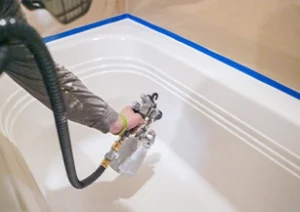
Bathtub refinishing enters the picture when owners want results without turning a bathroom into a construction zone. Unlike replacement, refinishing doesn’t involve tearing anything out. The tub stays exactly where it is. That alone removes several major cost drivers, demolition, disposal, plumbing changes and rebuild work, which is why refinishing consistently comes in far lower.
In most cases, professional bathtub refinishing costs a few hundred dollars per tub, often landing somewhere between $400 and $900, depending on the condition of the surface and the scope of repairs needed. Even at the higher end, it remains a fraction of what replacement costs once labor and downtime are factored in, especially when you look at how refinishing costs compare to full bathtub replacement across multiple rooms.
Most importantly, the pricing is predictable. There are fewer variables, fewer trades involved and far less risk of uncovering hidden issues behind walls or under flooring. For hotel owners and property managers, that predictability matters just as much as the dollar amount itself.
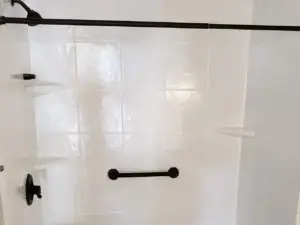
Refinishing also keeps labor efficient. One technician can often complete multiple tubs in a single day, especially when working room-to-room in the same property. That efficiency shows up directly in cost savings when projects scale beyond a single bathroom. And while refinishing costs less, the outcome doesn’t look “lesser.” A professionally refinished tub has a smooth, glossy finish that restores the appearance guests expect. In either case, whether the tub is new or refinished, they’ll simply see that it’s clean, bright and well maintained. For properties managing dozens of rooms, refinishing shifts the conversation from “Can we afford to do this?” to “How quickly can we schedule it?”
For hotels across Hampton Roads and Virginia looking to extend the life of their bathrooms without major renovations, professional bathtub refinishing offers a practical way to restore worn tubs while keeping rooms in service.
Replacement vs. Refinishing: Cost at Scale for Hotels
Costs look very different when you stop thinking in terms of a single bathroom and start thinking in terms of an entire property. Replacing one bathtub might feel manageable. Replacing ten, twenty or fifty is where the decision really shows its weight.
With replacement, every is its own mini construction project. Each one requires labor, coordination, materials and downtime. Even when work is staggered, rooms cycle in and out of service for longer periods and the overall project can stretch on for weeks. Costs add up not just in invoices, but in operational friction, scheduling crews, adjusting housekeeping flow and managing availability during peak seasons.
Refinishing behaves differently at scale. Because tubs stay in place, work can be planned room-by-room or floor-by-floor with far less disruption. Multiple tubs can be refinished in a single visit, often within the same day or over a tightly controlled schedule. That efficiency matters when you’re managing occupancy and trying to avoid having entire sections of a hotel offline at once.
From a budget standpoint, refinishing also keeps spending flexible. Instead of committing to a large capital project upfront, hotels can refresh bathrooms in phases, prioritizing high traffic rooms, older wings or problem areas first. That approach spreads costs over time while still improving guest facing spaces quickly.
For hotel owners and property managers, this is often where the decision becomes clear. It’s not just that refinishing costs less per tub, it’s that it fits the way hotels actually operate.
Why Hotels Prefer Refinishing
Hotels don’t choose refinishing because it’s trendy. They choose it because it works within the realities of running a property day in and day out.
One of the biggest advantages is speed. Refinishing allows hotels to address worn bathtubs without shutting down large blocks of rooms. Work can be scheduled around occupancy, completed quickly and wrapped up before it starts affecting guest flow. That kind of flexibility is hard to achieve with replacement projects.
For properties that need consistent results across multiple rooms, hotel tub and shower refinishing makes it possible to refresh bathrooms efficiently, room by room, without the disruption or extended downtime that comes with full replacement work.
There’s also the advantage of batch efficiency. When multiple tubs are refinished together, the process becomes even more streamlined. Crews can move room to room without resetting equipment or coordinating additional trades. For property managers, that means fewer moving parts and fewer chances for delays.
Consistency is another major factor. Over time, hotels often end up with bathrooms that feel uneven, some updated, some visibly older. Refinishing makes it easier to bring rooms back to the same standard without hunting for matching fixtures or redesigning entire spaces. Guests don’t notice the method used; they notice that everything feels clean, uniform and well maintained.
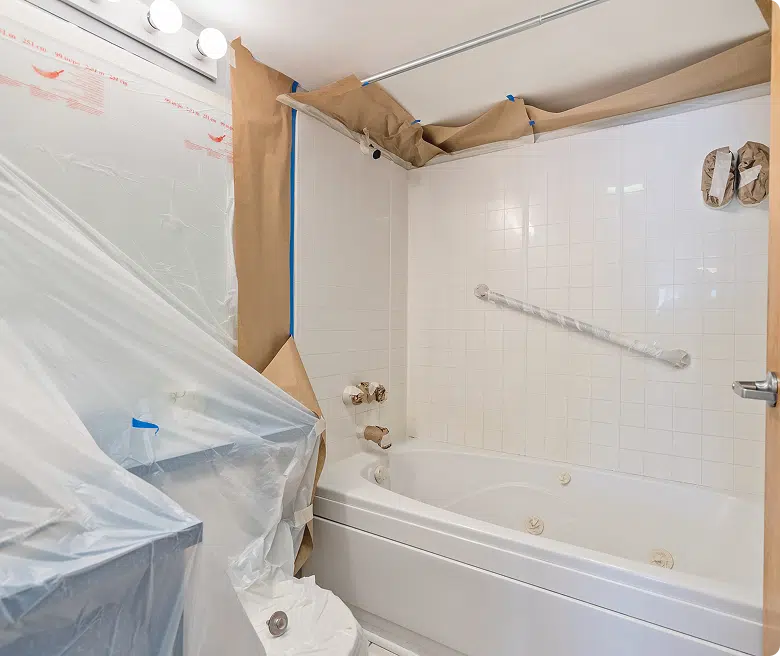
Just as important is guest disruption. Replacement projects introduce noise, dust and longer construction timelines, things guests quickly pick up on. Refinishing is quieter, cleaner and far less intrusive, which helps protect the guest experience while improvements are being made behind the scenes. There’s also the advantage of batch efficiency. When multiple tubs are refinished together, the process becomes even more streamlined. Crews can move room to room without resetting equipment or coordinating additional trades. For property managers, that means fewer moving parts and fewer chances for delays.
Consistency is another major factor. Over time, hotels often end up with bathrooms that feel uneven, some updated, some visibly older. Refinishing makes it easier to bring rooms back to the same standard without hunting for matching fixtures or redesigning entire spaces. Guests don’t notice the method used; they notice that everything feels clean, uniform and well maintained.
Just as important is guest disruption. Replacement projects introduce noise, dust and longer construction timelines, things guests quickly pick up on. Refinishing is quieter, cleaner and far less intrusive, which helps protect the guest experience while improvements are being made behind the scenes.
How Bathtub Condition Impacts Guest Experience and Reviews
Guests rarely comment when a bathroom looks fine. They comment when something feels off. In hotels, bathtubs tend to fall into that quiet danger zone. A tub doesn’t have to be broken to hurt perception, it just has to look worn. Dull finishes, discoloration, hairline cracks or a surface that no longer feels smooth all send the same message to a guest: this room hasn’t been cared for in a while.
And once a guest notices it, their attention naturally shifts to everything else. Guests start noticing other details more critically. Towels don’t feel as fresh. Fixtures look older. Cleanliness gets questioned, even when housekeeping has done everything right. That’s how a single worn bathtub turns into a lukewarm review or a “room felt dated” comment that future guests read before booking.
From a review standpoint, bathrooms consistently rank among the top factors influencing guest satisfaction, especially for repeat travellers. Clean, modern looking tubs don’t just improve comfort, they protect ratings. They reduce complaints, lower refund requests and help keep properties competitive in a market where guests compare dozens of hotels at once.
This is where refinishing quietly does its best work. A freshly refinished bathtub removes one of the most common visual triggers for negative feedback. The surface looks new. It feels clean. It photographs well. And importantly, it aligns with what guests expect when they walk into a hotel bathroom, even in older properties.
For hotel owners and property managers, that means you’re not just improving a fixture. You’re removing friction from the guest experience. You’re protecting the reviews, reinforcing trust and doing it without pulling rooms offline or committing to full renovations. It’s one of the few upgrades where the guest impact is immediate, but the operational footprint stays small.
When Replacement Actually Makes Sense
As effective as refinishing is, it isn’t the right solution in every situation. And saying that openly matters, especially for hotel owners and property managers who’ve dealt with enough half-solutions to know better.
Bathtub replacement usually makes sense when there are structural issues that refinishing can’t address. Deep cracks, active leaks or damage beneath the tub that compromises waterproofing are situations where replacing the fixture is the safer long term decision. In those cases, refinishing would only mask a bigger problem.
Replacement also becomes more practical during full scale renovations. If a hotel is already gutting bathrooms, changing layouts, upgrading plumbing or rebranding with an entirely new design direction, replacing tubs may align better with the scope of work. When walls are already open and timelines are extended, the added disruption of replacement is less of a factor.
There are also design-driven reasons. Some properties choose to move away from traditional tubs altogether, opting for walk-in showers or accessibility upgrades. Those changes require replacement by default, not because refinishing failed but because the function itself is changing. The key difference is intent.
Replacement works best when it’s part of a larger, planned renovation, not as a reaction to surface wear alone. When tubs are structurally sound and the issue is age, appearance or finish, refinishing usually solves the problem more efficiently and with far less operational impact. Knowing when to replace and when not to, is what separates strategic maintenance from unnecessary renovation.
The Smarter Long Term Approach for Hotels and Managed Properties
When you step back and look at the full picture, cost, downtime, guest perception and operational impact, the difference between replacing and refinishing bathtubs becomes clearer. Replacement has its place. But for most hotels and managed properties, it’s a heavier solution than the problem actually requires. It ties up capital, takes rooms offline longer and introduces disruption that’s hard to justify when the issue is surface wear rather than structural failure.
Refinishing, on the other hand, aligns with how hotels really operate. It restores the appearance guests care about, keeps room in service and allows upgrades to happen quickly and predictably. It’s a practical way to protect reviews, maintain standards and extend the life of existing failures without turning routine maintenance into a renovation project.
That’s why many hotel owners and property managers across Hampton Roads, Virginia and the surrounding areas continue to choose refinishing as their go-to solution. It delivers visible results where they matter the most, in the guest experience while keeping operations running smoothly behind the scenes.
The Tub Guys are proud to offer professional tub and shower refinishing services throughout the region, working with hotels and multi-unit properties that value efficiency, consistency and long term value. When the goal is to refresh bathrooms without unnecessary disruption, refinishing remains one of the smartest upgrades a property can make.